
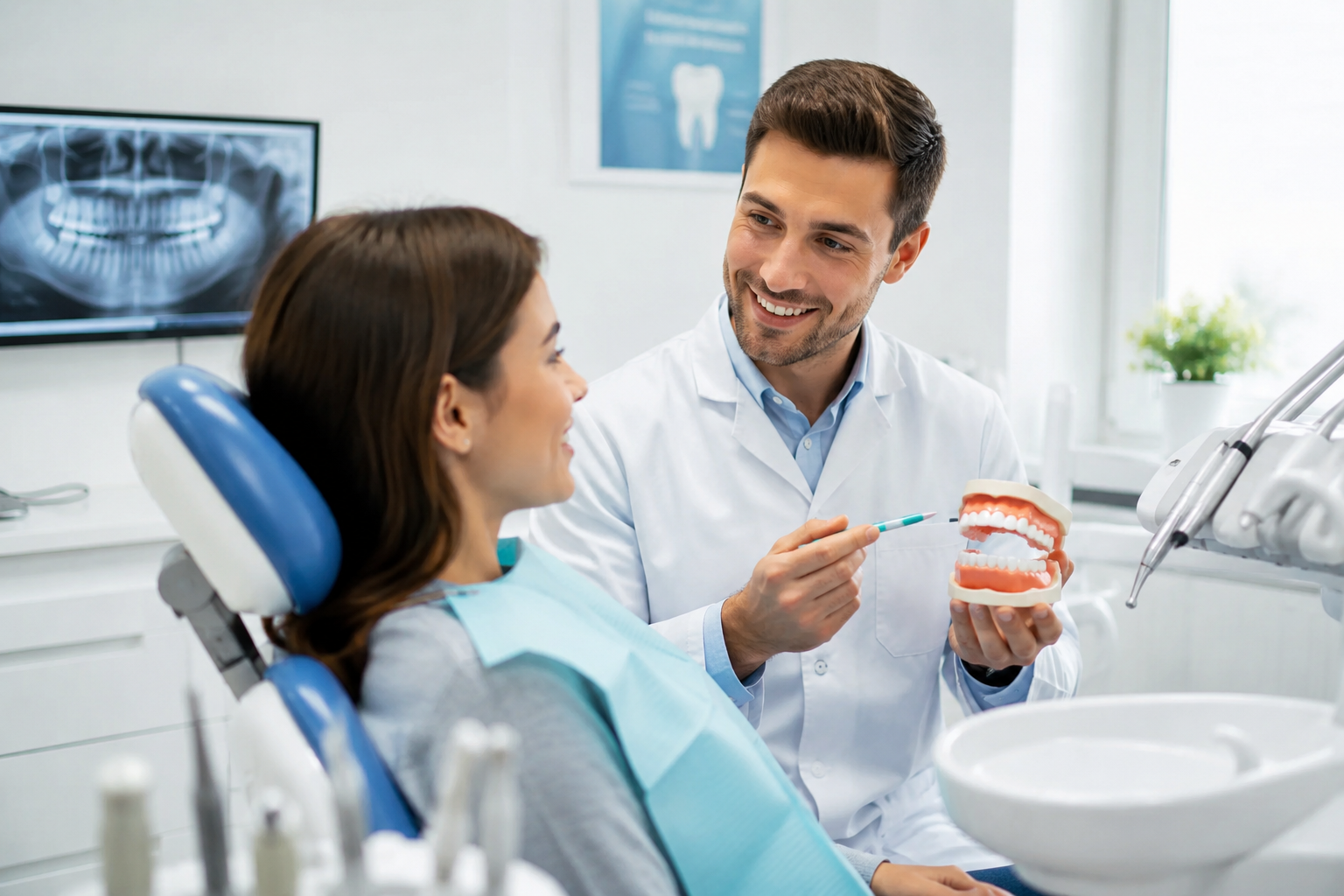
You’ll notice brighter teeth can change how people respond to you and how you feel about smiling in photos and meetings. Professional teeth whitening in Brooklyn NY delivers fast, reliable shade improvement that looks natural and boosts your confidence without long recovery or complex care.
This article explains what whitening actually involves, why choosing local Brooklyn experts matters for comfort and safety, and how the treatment connects to long-term oral health. Expect clear comparisons of in-office and at-home options, practical tips for minimizing sensitivity, and next steps to explore treatment with a trusted neighborhood practice.
Teeth whitening lightens discoloration using chemical agents and sometimes light to accelerate results. The process varies by method, expected speed of results, and degree of professional supervision.
Whitening uses peroxide-based agents—carbamide peroxide or hydrogen peroxide—that penetrate enamel to break down colored molecules (chromogens). Professional in-office gels typically contain higher peroxide concentrations (25–40% hydrogen peroxide or equivalent) for faster, controlled results. At-home dentist-prescribed trays use lower concentrations (10–20% carbamide peroxide) applied for several nights to achieve gradual lifting of stains.
Light or laser sources sometimes accompany in-office treatments to speed activation, though evidence of added benefit is mixed. Surface polishing and removal of plaque or calculus before whitening improves uniformity. Sensitivity can occur because peroxide temporarily opens dentinal tubules; clinicians often use desensitizing agents or lower concentrations to manage this.
Professional in-office whitening delivers the quickest, most predictable change—often several shades in one visit—because clinicians control concentration, isolation, and application. They can protect gums with barriers and monitor sensitivity and tissue reaction immediately. Office whitening suits patients seeking fast, supervised whitening for events or deeper tetracycline/age-related stains.
At-home options include custom trays from a dentist, over-the-counter strips, and whitening toothpaste. Custom trays provide more even, safer whitening than strips because they fit the teeth precisely and reduce gum exposure. Over-the-counter products are less expensive but offer milder, slower results and higher risk of uneven whitening or gum irritation if misused.
Before treatment, a dental exam checks for cavities, gum disease, and restorations; untreated issues should be addressed first because whitening won’t alter fillings or crowns. The clinician will match a tooth shade, photograph teeth, and discuss realistic goals and potential sensitivity. Preparatory cleaning removes surface stains and plaque for consistent whitening.
After whitening, teeth may feel sensitive for a few days; using desensitizing toothpaste and avoiding hot or acidic foods helps. Whitening effects can last from several months to a few years depending on diet, smoking, and oral hygiene. Patients with restorations should plan for shade-matching restorations after whitening because crowns and veneers don’t respond to peroxide and may need replacement to match the new tooth color.
Teeth whitening can change daily interactions and self-image by making smiles feel more attractive and professional. It often reduces hesitation in social situations and encourages more frequent smiling.
A visibly whiter smile often leads people to feel more confident about their appearance. When stains and discoloration diminish, patients report fewer worries about being judged for dental color and more willingness to show teeth in photos, meetings, and dates.
Improved tooth shade can also influence self-care habits. After whitening, many people maintain better oral hygiene to preserve results, brushing and attending regular cleanings more consistently.
Dental professionals set realistic expectations, explaining that results vary by stain type and that touch-ups may be needed. This helps patients feel informed and satisfied with outcomes rather than disappointed by unrealistic promises.
Whiter teeth often contribute to stronger first impressions in both personal and professional settings. A brighter smile can convey approachability and attentiveness during interviews, client meetings, or social introductions.
People who feel good about their smiles tend to speak and laugh more freely, which improves rapport and conversational flow. That increased openness can lead to better networking, relationship-building, and perceived confidence in group settings.
Clinics in Brooklyn commonly combine whitening with cosmetic advice—like timing treatments before important events—so patients present their best selves when it matters most.
Improved satisfaction with one’s smile can reduce self-conscious thoughts and social anxiety. When patients stop fixating on tooth color, they free mental energy for work, hobbies, and relationships.
Small changes in appearance can produce measurable boosts in mood and motivation. Patients often describe feeling more optimistic and willing to engage in social activities after whitening.
Dentists emphasize holistic care: whitening is presented as one tool among preventive treatments and counseling about expectations. That balanced approach minimizes disappointment and supports sustained emotional benefits.
Professional whitening provides targeted stain removal, consistent results, and care that protects tooth structure and soft tissues. Patients experience faster brightening with lower risk of side effects when treatments are supervised by licensed dental professionals.
Dentists evaluate enamel thickness, restorations, and sensitivity before beginning treatment. They use custom trays or in-office lamps with regulated peroxide concentrations, reducing the chance of uneven whitening or enamel erosion.
Clinicians isolate gums with protective barriers and monitor exposure time to avoid chemical burns. If a patient has active decay, cracked teeth, or composite fillings, the dentist addresses those issues first to prevent pain or compromised outcomes.
Licensed staff can modify formulas or pause treatment for heightened sensitivity. They document baseline tooth shade and follow-up, creating a safe, recorded pathway that protects oral health while improving tooth color.
Professional whitening focuses on chromogenic stains from coffee, tea, tobacco, and some foods, breaking down pigment molecules that attach to enamel. Hygienic polishing and scaling often precede whitening to remove plaque and tartar that block whitening agents.
Dentists use higher-peroxide systems that penetrate enamel more uniformly than over-the-counter strips, producing noticeable shade changes in one to a few visits. They tailor treatment to intrinsic versus extrinsic stains, recommending alternative restorative options when internal discoloration won’t respond.
Aftercare instructions include avoiding staining foods for 48–72 hours and using non-abrasive toothpaste. Regular hygiene visits help maintain results and prevent plaque buildup that can dull brightened teeth.
Professional protocols prioritize gum health by using barrier gels, rubber dams, or custom trays that seal whitening gel away from soft tissue. This targeted application lowers the incidence of chemical irritation and painful lesions.
If patients report tingling or inflammation, clinicians adjust concentration, shorten exposure time, or switch to desensitizing agents containing potassium nitrate or fluoride. They can prescribe topical treatments to speed gum recovery when needed.
Education on gentle brushing techniques and temporary avoidance of whitening products after periodontal treatment further reduces irritation risk. Ongoing dental supervision ensures any soft-tissue reaction receives prompt, appropriate care.
If they have questions about suitability or sensitivity, encourage them to schedule a consultation with a Brooklyn dental office to evaluate options and plan a comfortable, effective whitening approach.
Local providers combine specialized care, modern equipment, and community trust to deliver predictable whitening results with attention to comfort and safety. Patients get tailored plans, in-office and take-home options, and follow-up support from teams familiar with Brooklyn neighborhoods and schedules.
A Brooklyn practice conducts an initial exam that includes dental history, current restorations, and shade mapping under natural and operatory light. This determines whether whitening is appropriate or if alternatives (veneers, bonding) are needed, reducing surprises and protecting restorations.
They create a custom protocol — concentration of peroxide, duration of sessions, and choice between in-office LED-boosted treatments or dentist-dispensed take-home trays. Technicians document baseline photos and provide written aftercare: avoiding staining foods for 48–72 hours, using sensitivity toothpaste, and scheduling a short follow-up to assess results.
Communication focuses on comfort and realistic expectations. Staff explain possible transient sensitivity, how to manage it, and what level of whiteness is attainable given natural tooth color and prior dental work.
Many Brooklyn clinics use professional-grade hydrogen peroxide or carbamide peroxide systems with controlled delivery, not over-the-counter strengths. In-office options often pair a 25–40% peroxide gel with isolation and suction for safety, producing noticeable results in one visit.
LED or plasma accelerators may be offered to enhance activation; clinics monitor temperature and exposure time to avoid pulp irritation. Custom-fitted trays from digital or traditional impressions provide even gel contact for take-home use, limiting gum irritation and improving efficacy compared with one-size-fits-all strips.
Some offices track outcomes with digital shade guides and photos, allowing objective comparison and repeatable maintenance plans. Equipment calibration and staff training reduce variability between visits and between patients.
Brooklyn dentists align hours and appointment types with neighborhood needs, offering early, evening, and weekend slots for commuters and families. They accept a mix of insurance and flexible payment plans when procedures intersect with cosmetic-adjacent health concerns.
Clinics often partner with local labs and specialists, so restorations match new tooth shades and follow-up care stays coordinated. Staff speak multiple languages found in Brooklyn communities, easing consent discussions and aftercare instructions for diverse patients.
Community clinics emphasize safety and transparency, displaying treatment pricing, explaining risks, and offering conservative first treatments to prove comfort and results before more aggressive protocols. Patients leave with clear maintenance steps and contact options for any post-treatment questions.
Maintaining a bright smile involves more than occasional whitening. Consistent care, targeted prevention, and small daily habits determine how long results last and how teeth stay healthy.
Patients should avoid or limit foods and drinks that stain enamel, such as coffee, red wine, tea, and dark sodas. When consuming these, rinsing with water or using a straw reduces direct contact with front teeth.
Tobacco use accelerates discoloration and undermines whitening; quitting or cutting back yields the biggest long-term benefit.
At-home touch-ups with dentist-prescribed trays or take-home kits help maintain shade without overusing over-the-counter products. Professional checkups every 6–12 months allow the dentist to assess shade stability and recommend safe retreatment timing.
For sensitivity after whitening, using desensitizing toothpaste or prescribed fluoride gels before and after treatments minimizes discomfort and protects enamel.
Teeth whitening should integrate with routine preventive care rather than replace it. Regular cleanings remove surface stains and plaque, improving whitening outcomes and reducing gum disease risk.
A dental exam before whitening identifies issues—like decay, cracked enamel, or gum inflammation—that could worsen with bleaching.
Dentists tailor whitening plans around restorative work (crowns, veneers, fillings) because these materials don’t bleach. Coordinating whitening before shade-matching restorations prevents mismatched color later.
Preventive measures—fluoride treatments, sealants, and targeted hygiene instruction—help maintain both color and oral health over years.
Brushing twice daily with a fluoride toothpaste and flossing once daily prevents new stains from becoming permanent. Using a soft-bristled brush and gentle technique protects enamel that whitening can temporarily expose.
Incorporating an alcohol-free antimicrobial rinse reduces bacteria that contribute to staining and bad breath without irritating gums.
Scheduling professional cleanings and discussing maintenance whitening plans with the dentist keeps expectations realistic and timing appropriate. Creating small, consistent habits—rinsing after staining foods, carrying a travel toothbrush, and tracking sensitivity—makes maintenance practical for busy lives.
If concerns arise, patients should contact their dental office for tailored advice rather than relying solely on store-bought remedies.
Patients will learn how clinics reduce anxiety, compare professional whitening methods, and what to expect from start to finish. The focus stays on comfort, safety, and predictable results that fit daily life and budget.
Many patients feel nervous before whitening; dentists address that with clear steps and gentle care. Clinics often offer noise-cancelling headphones, warm blankets, or sedation options like nitrous oxide for those with strong anxiety.
Staff take a calm, patient-centered approach: they explain each step, show the materials (gels, trays, lights), and answer questions before any treatment begins. Sensitivity management is routine—desensitizing gels, lower-concentration peroxide, or shorter sessions minimize discomfort.
A pre-treatment exam checks for cavities, gum disease, or exposed roots that could worsen sensitivity. If any issues appear, the dentist treats them first or recommends an alternative plan, ensuring whitening does not compromise oral health.
In-office whitening uses higher-concentration peroxide and professional lights or lasers for faster, more controlled results. It typically achieves several shades of improvement in one visit while the dentist monitors gum protection and pulp response.
Take-home trays provided by the dentist use custom-fit molds and lower-concentration gel for gradual whitening over one to two weeks. This option suits patients who prefer pacing, evening application, or minimizing chair time.
Over-the-counter products—strips, gels, and toothpaste—offer limited whitening and inconsistent fit, which can cause uneven results or gum irritation. Dentists recommend OTC only for maintenance after professional treatment or mild surface stains.
The dentist starts with a comprehensive exam and shade assessment, documenting baseline color with photos. This creates a treatment roadmap and sets realistic expectations for the number of sessions or weeks required.
During in-office treatment, the team isolates gums with a protective barrier, applies the whitening gel in measured amounts, and times each activation cycle. They pause if the patient reports sensitivity and apply desensitizing agents as needed.
For take-home plans, the dentist delivers custom trays with labeled syringes and a written schedule. Follow-up visits verify progress, adjust wear time, and address sensitivity or uneven whitening until the desired shade is reached.
If maintenance is needed, patients receive a schedule for touch-ups, recommended toothpaste, and lifestyle tips—limiting coffee, red wine, and tobacco—to prolong results and protect dental health.
They should start by scheduling a consultation with a Brooklyn dentist who offers whitening. A brief exam clarifies whether whitening suits their enamel and oral health, and the dentist can recommend in-office or take-home options.
They should review treatment details and costs before committing. Ask about expected results, number of visits, sensitivity management, and any necessary follow-up care.
They should compare professional versus over-the-counter options. Professionals provide stronger, monitored treatments and typically faster, more predictable results; OTC products can help maintain shade between professional sessions.
They should prepare questions to bring to the appointment. Useful questions include: “What whitening method do you recommend?”, “How long will results last?”, and “How do you minimize sensitivity?”
They should consider timing and lifestyle factors. Whitening works best after addressing cavities or gum issues, and avoiding staining foods or tobacco improves and prolongs results.
Quick checklist:
They should contact a trusted Brooklyn dental office to book an evaluation or request more information. A short consultation helps tailor a safe, comfortable whitening plan.
This section answers common concerns about professional teeth whitening in Brooklyn, including expected results, safety for sensitive teeth, costs, and how to prolong results. It explains how in-office treatment differs from over-the-counter options and what patients can realistically expect after treatment.
Professional whitening uses stronger, dentist-monitored bleaching agents and custom trays or in-office lamps, so it whitens more evenly and more predictably than drugstore kits. Dentists evaluate existing restorations and oral health first, reducing the risk of uneven color or sensitivity that OTC products can cause.
Whitening can boost confidence, which may improve social and professional interactions. It also encourages patients to maintain oral hygiene and routine dental visits, helping detect and prevent other dental issues earlier.
Many patients see noticeable lightening immediately after a single in-office session. Full color stabilization can occur over a few days as teeth rehydrate and any transient sensitivity subsides.
Professional whitening often lasts six months to three years depending on diet and habits. To prolong results, avoid coffee, red wine, and tobacco; use a whitening toothpaste occasionally; and schedule touch-ups or at-home maintenance trays recommended by the dentist.
Costs in Brooklyn typically range from a few hundred to over a thousand dollars depending on the method (in-office vs. take-home custom trays), the clinic’s expertise, and any required preparatory work. Additional factors include the need to replace old restorations or treat gum disease before whitening.
Many patients with sensitivity can still safely whiten under dental supervision. Dentists can use desensitizing agents, lower-concentration gels, shorter application times, or prescribe potassium nitrate and fluoride products to reduce discomfort before and after treatment.